An Analysis by Journalist, Dean Blundell April 29th 2026
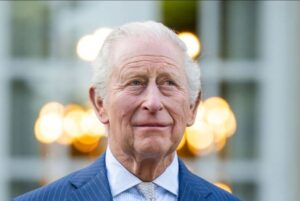
There is an old British art form that Americans, despite our many gifts, have never quite mastered. It is the art of saying terrible things about a man while he smiles and nods, convinced you are paying him a compliment. King Charles III flew across the Atlantic on April 28, 2026, walked into the United States Capitol, and gave a master class channelling his inner Mark Carney.
By the time he sat down to dinner at the White House that evening, he had — without raising his voice, without breaking decorum, without uttering Donald Trump’s name a single time in anger — done something no Democrat, no journalist, and no foreign leader has managed in a decade. He made the President of the United States look small in his own ballroom.
And he did it with jokes. To understand why this day mattered — why Charles’s mild, twinkling little speeches are going to be studied in foreign-policy seminars for years — you have to understand the moment. Just three days earlier, on Saturday night, a man had opened fire at the White House Correspondents’ Dinner in an apparent attempt on Trump’s life. Reporting indicated the suspect had attended a “No Kings” protest, part of a movement that has erupted in response to what critics call Trump’s increasingly imperial style of governance.
So the symbolism was already absurd. A President who insists he is not a king, in a country whose entire founding mythology is built on the violent rejection of monarchy, was about to throw open the doors of the White House for an actual hereditary king — the head of the same throne the colonies revolted against in 1776 — and the White House communications team was, at that very moment, posting a photograph of the two men captioned “TWO KINGS.”
You couldn’t write it. And Charles, bless him, knew it.
Only the second British monarch ever to address a joint meeting of the United States Congress — his mother, Queen Elizabeth II, was the first, in 1991 — Charles took the rostrum at 3:09 p.m. He spoke for roughly 25 minutes. He received multiple standing ovations, including from Democrats who have spent the past year searching for someone, anyone, capable of saying out loud what they have been thinking.
The themes were familiar — the “indispensable alliance,” 250 years of shared history, Magna Carta, Lincoln, the Gettysburg Address. The substance was something else entirely.
☆ The Ukraine Hammer ☆
The single most electric moment of the speech came when Charles invoked the post-9/11 alliance — when NATO triggered Article Five for the first time in its history to defend the United States — and then pivoted, with the unhurried grace of a surgeon, into the present.
“Today”, he told the chamber, “that same unyielding resolve is needed for the defence of Ukraine and her most courageous people, in order to secure a truly just and lasting peace.”
Members of Congress rose to their feet. Both parties. Together. In a Congress that cannot agree on a lunch order, Republicans and Democrats stood shoulder to shoulder to applaud a foreign monarch publicly contradicting the foreign policy of the man who had hosted him for breakfast.
This was not subtle. This was not subtext. Trump has spent months pressuring Congress to choke off Ukraine aid, has berated Volodymyr Zelensky in the Oval Office, and has openly mused about cutting Kyiv loose to make a deal with Vladimir Putin. The King of England flew into Washington and, in the chamber where that policy is funded, asked the United States — politely, beautifully, with a small bow toward the Speaker — to do the opposite. The Kyiv Post called it the moment of the visit. Republican Senator Lindsey Graham, of all people, conceded on X that it was odd “that the unifying feeling had to come from the King of England… but so be it.”
☆ The “Checks and Balances” Knife ☆
Then came the line that drew thunderous applause from the Democratic side of the aisle, and stony silence from much of the Republican side. Charles walked his audience through the lineage of American constitutional liberty — the 1689 English Declaration of Rights, the 1791 American Bill of Rights, and Magna Carta itself, which the U.S. Supreme Court Historical Society notes has been cited in at least 160 Supreme Court cases since 1789. He lingered, deliberately, on Magna Carta as the foundation of the principle that executive power is subject to checks and balances.
Read that again. The hereditary king of the United Kingdom, standing in the United States Capitol, lectured the United States — at a moment when its President is openly defying federal courts, threatening to deploy the military against domestic protesters, and being accused by his own former officials of attempting to consolidate executive power beyond constitutional limits — on the importance of constraining executive power.
The founding President of the Institute for the Study of the Crown in Canada called it, plainly, “definitely a jab” at Trump. CBC’s analysis put it more bluntly: a real king, rooted in a constitutional, limited monarchy, drew an implicit contrast with a President whose critics warn is seeking imperial powers. The irony is almost too perfect. America fought a revolution to escape a king. In 2026, the king came back to remind us why we did it.
☆The NATO Correction ☆
Charles also gently — so gently — corrected the historical record on NATO. Trump has spent his entire political career complaining that European allies are freeloaders who do not pay their share. Charles reminded the chamber that after 9/11, when Article Five was invoked for the first and only time in the alliance’s history, it was invoked to defend the United States. European troops fought and died alongside Americans in Afghanistan because of that clause. The alliance has, on the only occasion it was ever truly tested, run in one direction: toward America. And Charles invoked that same NAO Article 5 resolve for Ukraine – effectively stuffing the Trump regime in an overly kind “Brit-box” for their abandonment of the Ukrainian People.
It’s worth watching again…
He did not say “you are wrong, Mr. President.” He said: shoulder to shoulder, two World Wars, the Cold War, Afghanistan. He let the dates do the work.
The Closing Warning: Lincoln, Quoted at a Man Who Has Never Read Him. Charles ended his speech with a line that landed like a stone dropped in still water. Quoting Abraham Lincoln’s Gettysburg Address, he reminded Congress that the world may little note what we say, but will never forget what we do.
It was a warning aimed directly at Trump’s second term — a quiet caution that the damage being done now will outlast the speeches given to justify it. America’s words carry weight, Charles said. Its actions matter even more.
A monarch, by definition, represents continuity. Trump, by definition, cannot. The speech ended with the king, who will still be there, reminding the President who won’t that history grades on results, not rallies.
The American Dream, Quietly Mourned
One of the most striking through-lines of the speech, picked up on by foreign-policy commentators almost immediately, was Charles’s repeated invocation of an idea of America that the rest of the world is no longer sure exists.
He praised the “vibrant, diverse and free societies” of both nations. He lingered on the Capitol as a “citadel of democracy created to represent the voice of all American people.” He invoked the Statue of Freedom above the chamber, JFK’s monument at Runnymede, and the deliberation of many rather than the will of one.
These are all phrases that, ten years ago, would have read as standard diplomatic boilerplate. In 2026, they read as an elegy.
Charles was describing an America that the rest of the world believed in — an America of pluralism, of constitutional restraint, of moral leadership — and he was describing it in the past-conditional, the way you describe a beloved friend who has been unwell for some time.
This was the speech’s most devastating undercurrent: not anger, not rebuke, but grief. The American dream, Charles seemed to say, is a thing the world used to count on. He would very much like it to come back.
☆ The State Dinner: Where the Knives Came Out (Wrapped in Linen) ☆
If the address to Congress was the iron fist, the state dinner that evening was the velvet glove — and somehow, the velvet glove drew more blood. The setting itself was charged. The dinner was held under a white-tie dress code, the first such event at the White House in nearly twenty years (the last was for Charles’s mother, in 2007). One hundred and twenty guests, including a noticeably heavy contingent of Fox News personalities and tech billionaires — Bezos, Huang, Cook, Benioff — packed the East Room.
Trump, predictably, opened his toast by complimenting himself. He praised Charles’s speech, joked that the king had managed to get Democrats to stand — “I’ve never been able to do that” — and reminisced about his visit to Windsor Castle, telling the room that he had “looked down as a former real estate person, and it just went on forever.”
Then it was Charles’s turn.
Joke #1: “You’d Be Speaking French”
Charles opened his comedic bombing run by referring directly to a remark Trump had made at Davos in January, when the President told European leaders that without American help in World War II, “you’d be speaking German and a little Japanese.”
Then Charles, smiling, delivered his line: dare he say, if it were not for the British, the Americans would be speaking French. Technically, this is a reference to the French and Indian War — the 18th-century colonial struggle in which British forces defeated the French for control of North America, paving the way for the colonies that became the United States. Politely, it is a history lesson.
Less politely, it is the King of England standing in the White House and informing the President of the United States that the country he leads exists in its current linguistic and cultural form because the British put it there. It is a 270-year-old receipt, produced over dessert. The room laughed. Trump laughed. It is not entirely clear whether Trump understood.
☆ Joke #2: The 1814 Real Estate Project ☆
Charles then pivoted to Trump’s most cherished domestic vanity project: the demolition of the East Wing of the White House to make way for a $400 million ballroom Trump has been building, financed in significant part by private donors and corporate interests, against the howling objections of historians and preservationists. He could not help noticing, the king observed dryly, the “readjustments” to the East Wing. He was, he said, sorry to report that the British had made their own attempt at real estate redevelopment of the White House in 1814.
This was the moment of the night. In 1814, during the War of 1812, British soldiers marched into Washington and burned the White House to the ground. Charles — heir to that throne, head of that state — stood in the rebuilt building, looked at the demolition crew’s work outside, and gently equated Donald Trump’s signature architectural legacy with an act of foreign arson.
The line was so good it hurt. The room — Fox hosts, cabinet secretaries, billionaires — laughed because there was nothing else to do.
☆ Joke #3: “An Improvement on the Boston Tea Party” ☆
Not yet finished, Charles raised his glass and observed that the dinner before them was “a very considerable improvement on the Boston Tea Party” of 1773.
The Boston Tea Party — the seminal act of American defiance against British taxation, the moment American schoolchildren are taught marks the spiritual beginning of the Revolution — was reframed by the British monarch, in the White House, as a catering disappointment that the present evening had managed to upgrade.
It is the single most quintessentially British line ever uttered at a state dinner. He turned the founding myth of American independence into a lukewarm Yelp review.
☆ The Gift: HMS Trump ☆
And then, the coup de grâce. Charles presented Trump with a gift: the original bell from the conning tower of HMS Trump, a British submarine launched in 1944 that served in the Pacific theater during World War II. The bell is inscribed “Trump 1944.”
It is, on its face, a thoughtful and personal gesture. Read more carefully, it is something else. The submarine was a tool of Allied warfare in a war that Trump’s own foreign-policy worldview — “America First,” skepticism of European alliances, transactional reading of NATO — implicitly rejects.
The gift quietly reminds Trump that his name, in British history, is attached to a vessel that fought as part of a coalition. To accept the bell graciously is to accept the premise. And then, raising his glass, Charles delivered the kicker. Should the Americans ever need to get hold of the British, he said, well, just give them a ring.
A bell. A ring. A subtle, smiling reminder, on the night Trump has been publicly feuding with Prime Minister Keir Starmer over Britain’s refusal to join the U.S.-Israeli war on Iran, that the British remain the people you call when things go sideways. The applause was loud. Trump beamed. Whether he registered, in the moment, that he had been handed a bell to remind him to answer his phone, only history will say.
Why This Mattered: The Historical Weight
Three things make this state visit historically significant, and none of them is the white-tie dress code.
First, it was only the second time in history a British monarch has addressed a joint meeting of the U.S. Congress. The first was Queen Elizabeth II in 1991, in the wake of the Gulf War, in a speech that praised democracy, multilateralism, the United Nations, and NATO.
Charles’s speech, 35 years later, hit the same notes — but in a context where the U.S. President has openly questioned every one of those institutions. The continuity is the message. The Crown stands where it stood. The question was whether America still does.
Second, this is one of the rare modern moments in which a foreign head of state has used American soil — and the American constitutional system itself — to push back, on the record, against the policies of a sitting American President. He did not violate diplomatic protocol. He did not name Trump. He did not have to. The Ukraine line, the checks-and-balances line, the NATO line — each was an unmistakable rebuttal, delivered to standing ovations, in the building where U.S. policy is made.
Third, and most quietly, it was a reassertion of the idea of the West. For 80 years, the postwar liberal order has rested on a tacit bargain: America provides the muscle, Europe provides the legitimacy, and together they defend a set of values — democratic governance, rule of law, collective security, support for nations that resist authoritarian aggression — that no single country could defend alone.
Trump has spent his second term shredding that bargain. Charles, in 25 minutes at a microphone, reminded the room what the bargain was, who it has served, and what is at stake if it is allowed to die.
He did it as a king. He did it speaking for a constitutional monarchy in which his actual political power is essentially zero. And that is precisely why it landed: because the symbolism of the office — continuity, restraint, duty, service — is everything Trump’s presidency is not.
☆ The Final Read ☆
What happened on April 28, 2026, will be studied. Not for the choreography, though the choreography was immaculate. Not for the menu, though, Melania’s office made sure the menu got attention.
It will be studied because a 77-year-old constitutional monarch with no army, no veto, and no vote walked into the most powerful country on earth and, in front of its Congress and its President, said the things its allies have been too frightened, too compromised, or too transactional to say out loud.

He defended Ukraine.
He defended NATO.
He defended the principle of executive restraint.
He mourned, by implication, the American dream.
And then he went to dinner, made three jokes, handed Trump a bell, and went home.
The “No Kings” protesters in the streets outside should perhaps pause to consider the irony. On April 28, 2026, the only person in Washington willing to speak plainly about the danger of unchecked executive power, the abandonment of allies, and the corrosion of democratic norms was the King of England.
History will note what he said. It will note what we do.